Rosacea can vary substantially from one patient to another. The following photographs reflect common patterns of signs and symptoms, although it’s important to note that signs and symptoms may appear in a wide variety of combinations.
A full listing of the potential signs and symptoms of rosacea can be found on All About Rosacea. See Treatment Photos for a before-and-after look at some treatment options.
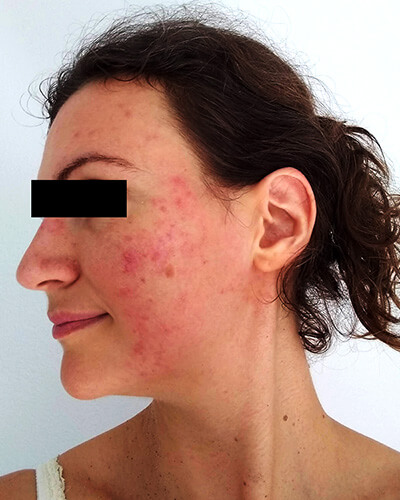
Facial Redness (Neurovascular Rosacea)
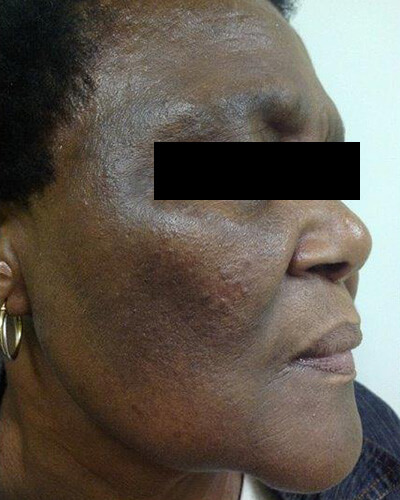
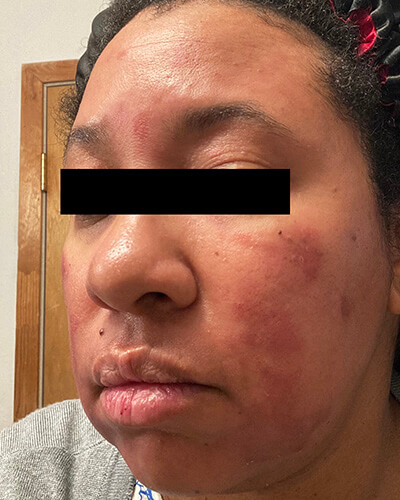
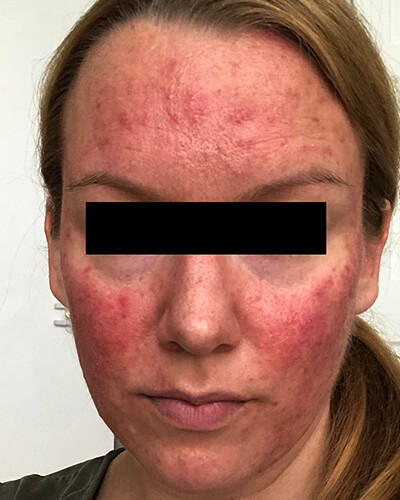
Rosacea sufferers often experience flushing and persistent facial redness (erythema). Small blood vessels may also become visible in some patients, and stinging, burning, swelling and roughness or scaling may occur.
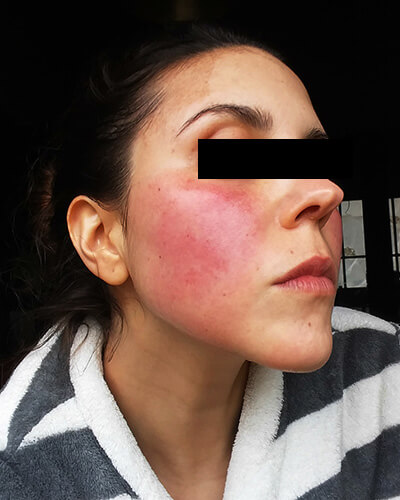
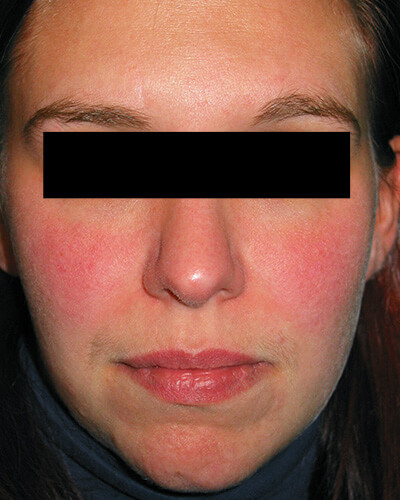
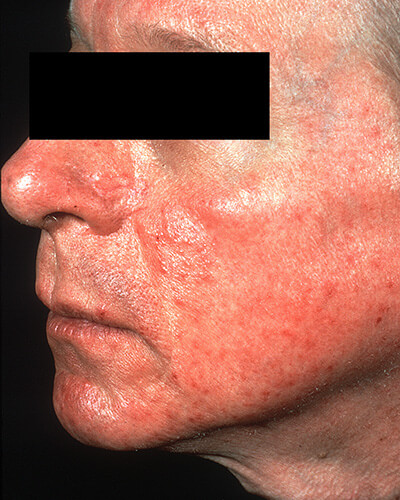
In darker skin tones persistent redness may appear brown or purplish rather than red. Although the redness may be more difficult to detect, burning, stinging and flushing may still be present.
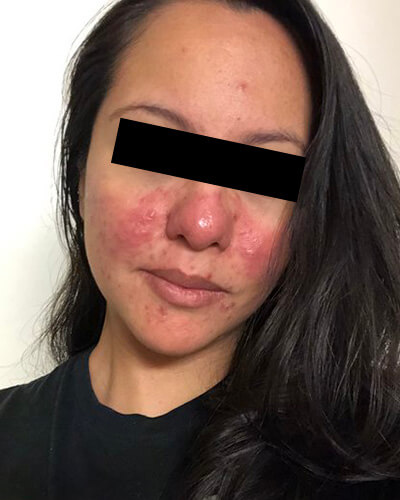
Bumps and Pimples (Inflammatory Rosacea)
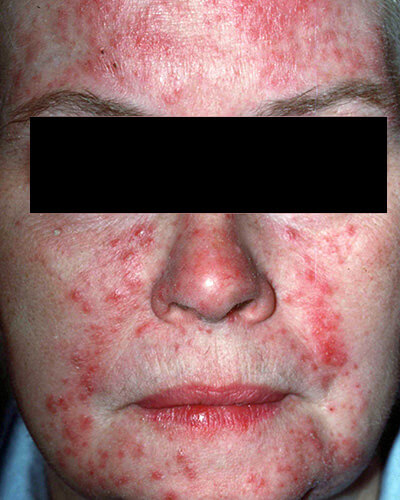
In addition to persistent redness, bumps (papules) and/or pimples (pustules) are common in many rosacea sufferers. Some patients may also experience raised red patches known as plaques.
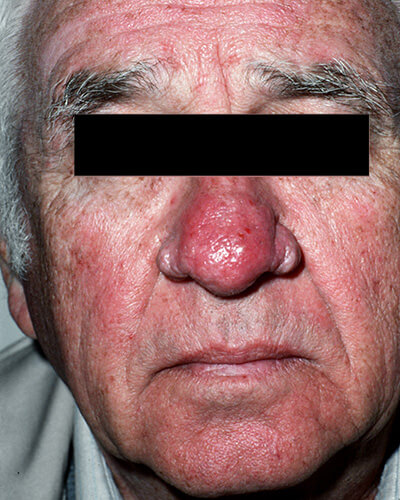
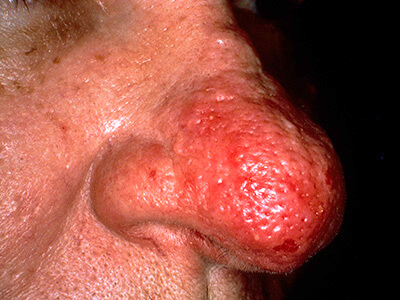
Enlargement of the Nose (Phymatous Rosacea)
Rosacea may be associated with enlargement of the nose from excess tissue, a condition known as rhinophyma. This may include thickening of the skin and irregular surface nodules, which in some cases may develop in areas other than the nose.
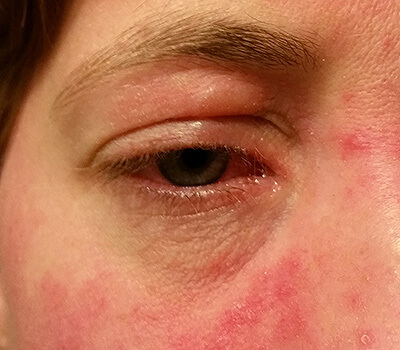
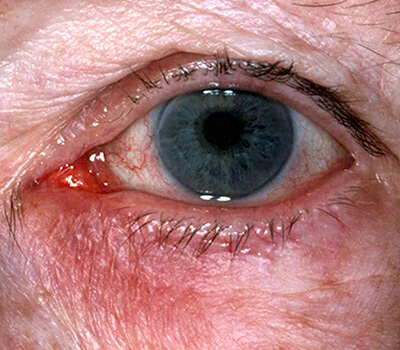
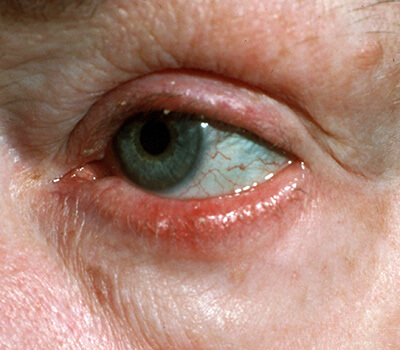
Eye Irritation (Ocular Rosacea)
Rosacea affects the eyes in many patients, and may result in a watery or bloodshot appearance, irritation and burning or stinging. The eyelids may also become swollen, and styes are common.
Acknowledgements: Patient photos were supplied by Dr. Joseph Bikowski, assistant clinical professor of dermatology, University of Pittsburgh; Dr. Jerome Z. Litt, assistant clinical professor of dermatology, Case Western Reserve University; and National Rosacea Society members.